


Winter Hot Tent Setup: A Complete Guide for Cold-Weather Camping
Winter Hot Tent Setup: A Complete Guide for Cold-Weather Camping
Quick answer: A complete winter hot tent setup combines a stove-ready shelter, a compatible vented wood stove and chimney, fire-resistant floor protection, controlled ventilation, secure winter anchoring, dry firewood, and a sleep system rated for the expected conditions. The stove makes camp more comfortable, but it should never replace an insulated sleeping pad and cold-weather sleeping bag. Follow the tent and stove manufacturers’ instructions, maintain all required clearances, and check local fire restrictions before lighting a fire.
Last reviewed: October 2026

Winter Hot Tent Setup at a Glance
| Component | Why It Matters | What to Check |
|---|---|---|
| Stove-ready hot tent | Provides a purpose-built stove-jack exit and usable winter shelter | Stove-jack design, usable floor area, packed size and winter anchoring |
| Tent-compatible wood stove | Adds temporary heat and a cooking surface | Manufacturer compatibility, stable legs, airflow control and pipe diameter |
| Chimney system | Carries smoke and combustion gases outside | Correct sections, secure joints, stove-jack fit and spark control if specified |
| Fire-resistant mat | Protects the floor from radiant heat, embers and ash | Coverage required by both manufacturers and flat, dry placement |
| Ventilation and CO alarm | Supports airflow and adds an early-warning layer | Unblocked vents and a battery-powered alarm suitable for the conditions |
| Winter sleep system | Keeps sleepers protected after the fire is out | Pad R-value and sleeping-bag rating appropriate for the forecast |
What Is a Winter Hot Tent Setup?
A winter hot tent setup is a cold-weather shelter system built around a tent that is designed to accommodate a properly vented wood-burning stove. Unlike an ordinary camping tent, a hot tent includes a reinforced, heat-resistant stove-jack area through which the chimney exits.
The complete system also needs floor protection, managed airflow, winter anchors, safe separation between the stove and combustible gear, and a sleeping setup that remains adequate without the stove.
The important distinction is that a hot tent is a system, not simply a tent with a heater inside. Shelter volume, stove and chimney compatibility, winter anchoring and the independent sleep system all affect whether the setup works.
Most hot tents and steel stoves are better suited to vehicle-supported camping or short carries than ultralight backpacking.

Complete Winter Hot Tent Setup Checklist
Use this checklist when planning your trip and again before leaving home. Compatibility matters more than the number of accessories you carry.
- Stove-ready winter tent: Use only a tent whose manufacturer supports stove use and provides a purpose-built stove jack.
- Compatible tent stove: Select a stable wood stove intended for hot-tent use and appropriately sized for the shelter.
- Complete chimney: Bring every required pipe section, connector and manufacturer-specified accessory. Test-fit the system before the trip.
- Floor and ember protection: Use the supplied or specified fire-resistant mat and keep loose gear away from the stove zone.
- Winter anchoring: Pack suitable stakes or snow anchors, guylines and any roof-support component supplied with the tent.
- Dry fuel and fire tools: Carry dry, appropriately sized wood, heat-resistant gloves, an ash tool and a safe way to store fuel away from the stove.
- Ventilation and detection: Keep designed vents unobstructed and bring a working battery-powered carbon-monoxide alarm as an additional precaution.
- Independent sleep system: Pack an insulated sleeping pad and a sleeping bag suitable for the expected low temperature.
- Emergency equipment: Keep water or an appropriate extinguisher accessible, plus a first-aid kit, communication device and clear exit path.
How to Set Up a Hot Tent in Winter
1. Choose a Safe, Legal Campsite
Confirm that both camping and wood-stove use are allowed on the date of your trip. Fire restrictions can change with weather and location, and a metal stove may still be restricted when wood fires are prohibited.
Select a site away from dead branches, unstable trees, avalanche terrain, deep tree wells and exposed wind funnels. Look for firm, level ground with enough room for the tent, guylines, chimney and a clear entrance.
2. Prepare the Tent Footprint
Remove sharp debris without damaging vegetation. In deep snow, compact a platform wider than the tent and let it settle before pitching. A firm platform reduces sinking and helps keep the stove stable.
3. Pitch and Anchor the Tent Completely
Assemble the tent according to its instructions, tension it evenly and use the required winter supports. When possible, orient the door away from prevailing wind and keep the stove-jack side clear. Recheck guylines as conditions change.
4. Build the Stove Zone Before Adding Bedding
Install the specified fire-resistant mat on a flat surface, then place the stove so every foot is stable. Keep the entrance usable and separate the stove from bedding, chairs, packs, wood and clothing.
Manufacturer-required clearance always takes priority over a generic layout recommendation.
5. Assemble and Secure the Chimney
Connect the correct chimney sections in the specified orientation. Guide the pipe through the stove jack without allowing hot metal to contact ordinary tent fabric.
Secure all supports and inspect every joint before lighting the stove. A chimney that shifts in the wind is not ready for use.
6. Establish Ventilation and Test the Draft
Open the required tent ventilation before starting a small test fire. Confirm that smoke draws up the chimney and does not leak into the shelter.
Watch the stove, pipe, stove jack and floor-protection area as the system warms. If smoke enters the tent, the pipe moves or the fabric becomes excessively hot, extinguish the fire and correct the cause instead of adding more fuel.
7. Add the Sleeping and Living Zones
After the stove zone passes inspection, place sleeping pads and sleeping bags on the opposite side with a direct path to the exit. Keep dry wood outside the required clearance zone.
Place camping chairs where they cannot narrow the exit, and establish a clear no-touch stove zone for everyone in the tent.
8. Operate Conservatively and Close Camp Cleanly
Use small, controlled fires and never use accelerants. Do not leave a burning stove unattended.
Before sleeping or leaving camp, follow the manufacturer’s shutdown procedure and verify that the fire is out. Remove ash only when it is completely cold, pack out waste where required, and leave the campsite according to land-manager rules.
Hot Tent Stove Safety Is Non-Negotiable
Carbon monoxide is colorless and odorless, and its early symptoms can resemble fatigue or altitude sickness.
The U.S. Consumer Product Safety Commission warns against using ordinary fuel-burning camping equipment in enclosed spaces and specifically warns against operating fuel-burning portable heaters or lanterns while sleeping in tents.
A hot-tent system must therefore be purpose-built, correctly vented and operated strictly according to its instructions. An improvised camp stove, grill or household heater is not a substitute for a properly designed hot-tent stove.
Keep these rules at the center of every winter camping trip:
- Use only equipment designed and documented for the intended hot-tent application.
- Never cut a DIY stove hole into a regular tent unless the tent manufacturer explicitly provides an approved conversion method.
- Maintain the exact clearances and ventilation specified by the tent and stove manufacturers.
- Keep the stove attended while it is burning.
- Use your insulated sleep system when the fire is out.
- Never use gasoline, alcohol or other accelerants to start or revive the fire.
- Place a working CO alarm where its manufacturer directs.
- Never treat a CO alarm as permission to ignore ventilation or other safety rules.
- Check current rules with the campground or land manager before every fire.
If anyone develops headache, dizziness, weakness, nausea, vomiting, unusual sleepiness or confusion, move everyone into fresh air immediately and seek emergency help.
For authoritative guidance, review the U.S. CPSC guidance on portable heaters and camping equipment and the current regulations for the campground or public land you plan to visit.
How to Choose a Hot Tent for Your Winter Setup
Choose Usable Space, Not Just the Person Rating
A stove, fire-resistant mat, wood supply and required safety clearances consume meaningful floor space. For two campers who want wide sleeping pads and winter gear inside, a nominal three-person shelter may feel compact.
Families and groups should consider how many beds, chairs and storage items must fit after the stove zone is established. Treat the advertised capacity as a starting point, then compare the actual dimensions with your intended layout.
Match the Shelter to Your Transportation
Insulated cabin tents and steel-framed canvas-style shelters deliver generous living space, but their packed size and weight generally make them best for car camping.
A smaller hub-style shelter can be faster to pitch and easier for two people to manage. If you must carry the shelter far from the vehicle, calculate the complete packed weight of the tent, stove, chimney, stakes, mat, tools and fuel.
Understand Fabric and Structure
Quilted insulated tents help reduce drafts and create a comfortable winter base camp, although they are typically heavier and bulkier.
TC polycotton tents provide a classic camping feel and spacious layouts, but they still require proper ventilation and weather management.
Hybrid cabin tents can combine a polycotton roof with water-resistant synthetic walls and floor.
No fabric makes stove operation automatic or risk-free. Stove-jack construction, frame stability, ventilation and manufacturer instructions remain decisive.
Decide Between a Tent-Only Purchase and a Bundle
A tent-only option makes sense when you already own a compatible stove and can verify the stove, chimney and stove-jack requirements.
A coordinated tent-and-stove bundle reduces the number of separate fit decisions and gives first-time buyers a clearer equipment list. Either way, perform a complete test setup outdoors before your first winter trip.
Recommended BRoadout Hot Tents and Winter Setups
The following recommendations are based on current published dimensions, construction and included components. The best choice depends on your group size, vehicle space, preferred interior layout and whether you already own a compatible stove.


Best Compact Complete Setup: SnowHouse X2 with Stove
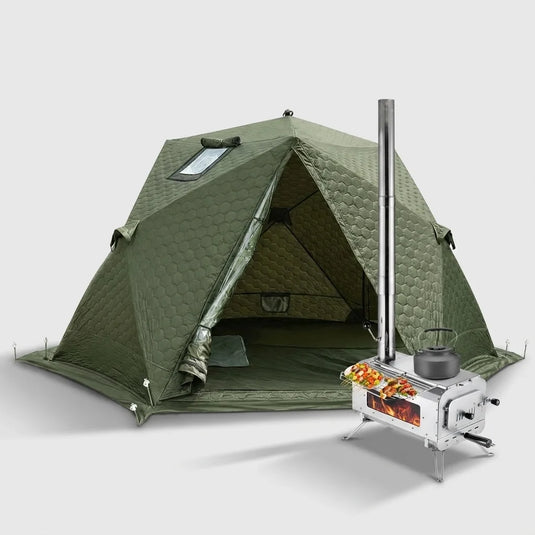
For a couple or small winter-camping team starting without a stove, the SnowHouse X2 bundle offers a direct path to a coordinated winter system.
The tent measures 118 × 102 × 61 inches, weighs 22.5 pounds and uses a three-layer insulated construction. The package pairs it with a fold-flat stainless-steel stove, six chimney sections, grilling nets, gloves, an ash hook and storage bags.
Its no-center-pole interior helps preserve usable floor space, but two sleepers should still plan their sleeping-pad positions around the stove zone before the trip.
Best Family Base Camp: SnowHouse 5 with SUREFIRE L2
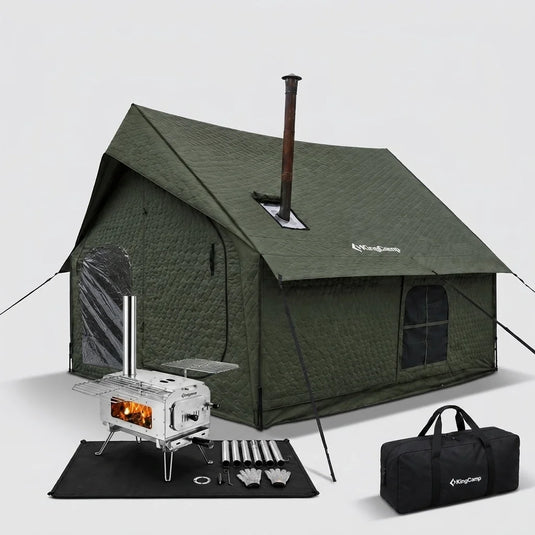
The SnowHouse 5 and SUREFIRE L2 bundle is a strong fit for families, groups and longer vehicle-supported stays.
The published tent size is 11 feet 2 inches by 7 feet 9 inches, with a 6-foot-9-inch peak height. A removable divider helps organize the interior, while the removable floor, snow skirts and winter anchoring support cold-weather use.
The bundle includes the large stainless-steel stove, six chimney sections and two fire-resistant floor-protection pieces. At 58.2 pounds for the tent alone, it is a base-camp option rather than a backpacking shelter.
Best Spacious Polycotton Option: KHAN LIGHT 400/500
Campers who prioritize a spacious social interior and a classic polycotton shelter can consider the KHAN LIGHT 400/500.
Both versions use 210-gsm TC polycotton and include a dedicated stove jack with a corresponding floor opening. The KHAN LIGHT 400 is published for 4–6 people, while the larger 500 is published for 8–10 people.
Actual winter capacity may be lower when wide sleeping systems, camp furniture, gear storage and generous stove clearances occupy the floor.
Best Hybrid Cabin Design: MOUNTAIN IN C5
The MOUNTAIN IN C5 suits campers who want standing room and a cabin-like footprint without an all-canvas body.
It is listed for 5–6 people at 11.1 × 7.9 × 6.9 feet and uses a TC polycotton roof, synthetic ripstop walls and a PU-coated Oxford floor.
The pre-installed stove jack, two doors and four mesh windows make it adaptable as a group living shelter. A spark-resistant groundsheet is included, but stove compatibility and all required clearances still need to be verified before use.
Your Stove Is Not Your Sleep System
A wood stove produces temporary heat, while an insulated sleeping pad and cold-weather sleeping bag protect you throughout the night.
Choose your sleeping pad by its R-value and the expected ground temperature. Select a sleeping bag with a tested temperature rating that provides an appropriate safety margin for the forecast and your personal cold tolerance.
Keep all bedding away from the stove and chimney. If the fire goes out at 2 a.m., your sleep system should still be capable of handling the overnight low temperature.
Before sleeping, change out of damp clothing and keep the next day’s layers dry. A warm hat and clean sleep socks can also help you remain comfortable without depending on the stove.
Complete your setup with BRoadout sleeping pads and sleeping bags.
Winter Hot Tent Setup FAQ
What do I need for a winter hot tent setup?
You need a stove-ready tent, compatible stove and chimney, specified fire protection, winter anchors, ventilation, a CO alarm, dry fuel, fire tools, emergency gear, and a temperature-appropriate sleeping pad and sleeping bag. Test the complete system outdoors before traveling.
Can I put a wood stove in a regular tent?
No. Use only a tent designed and documented for stove use with a purpose-built stove jack. Ordinary synthetic tent fabric can melt or ignite, and an improvised chimney opening does not establish safe clearance, ventilation or structural support.
Can you sleep with a hot tent stove burning?
The safest general practice is not to operate fuel-burning equipment while sleeping. Keep the stove attended, follow the equipment manufacturers’ instructions, and rely on a temperature-appropriate sleeping pad and sleeping bag after the fire is extinguished.
Never use an ordinary portable heater, grill or camp stove inside a tent.
Does a hot tent need ventilation in winter?
Yes. A hot tent needs the ventilation specified by its manufacturer, even in very cold weather. Do not close every vent to retain heat.
Ventilation, a correctly drafting chimney and a CO alarm are complementary precautions. None of them replaces the others.
What size hot tent should I buy?
Start with the number of sleepers, then account for the stove, required clearances, wide winter pads, clothing and dry storage.
Couples who want more living space may prefer a 3–5 person model, while families should compare actual floor dimensions rather than relying only on the advertised capacity.
Is an insulated hot tent better than a polycotton hot tent?
Neither design is best for every camper. Insulated tents are attractive for draft reduction and cold-weather comfort. Polycotton models often emphasize spacious, breathable living areas and a more traditional camping feel.
Compare packed weight, drying needs, interior layout, stove-jack design and transportation requirements before choosing.
Do I need a carbon-monoxide detector in a hot tent?
A working battery-powered CO alarm is a sensible additional warning layer when using a combustion appliance, provided it is suitable for the conditions and installed according to its instructions.
A CO alarm does not make an unsafe heater, poor ventilation, leaking chimney or unattended stove acceptable.
Can I use a hot tent stove during a fire ban?
Not automatically. Rules vary by agency, location, season and restriction level, and some fire bans include wood-burning stoves.
Check the current order with the campground or land manager immediately before your trip and carry a no-fire backup plan.
Build Your Winter Base Camp
The right winter hot tent setup is one you can pitch securely, ventilate correctly and use without depending on the fire for overnight survival.
Start with your group size and travel style, choose a purpose-built tent or coordinated tent-and-stove bundle, and practice the complete setup before snow is falling.
