



Winter Camping Gear Buying Guide: What You Need for a Warm, Safe Setup
Winter Camping Gear Buying Guide: What You Need for a Warm, Safe Setup
The best winter camping gear is a complete system, not one exceptionally warm product. Start with a weather-appropriate shelter, an insulated sleeping pad, a sleeping bag whose comfort rating is below the expected nighttime low, dry clothing layers, reliable lighting, food and water, and emergency supplies. For vehicle-supported trips, you can then add a hot tent, a properly vented wood stove, a cot, heated seating, or a powered blanket for more comfort.
If you are buying winter camping gear for the first time, spend your budget on the sleep system and shelter before buying convenience items. A thick sleeping bag cannot fully compensate for an uninsulated pad, and a heated accessory should never be your only source of warmth.

Winter Camping Gear Quick Checklist
A dependable cold-weather setup should protect you from wind, precipitation, frozen ground and changing temperatures. The following list covers the core systems most campers need.
| Gear Category | What to Look For | Priority |
|---|---|---|
| Shelter | Season rating, wind stability, snow management, ventilation and secure anchoring | Essential |
| Sleeping pad | Published R-value, full-body coverage and enough thickness for the sleeper | Essential |
| Sleeping bag | Comfort rating below the forecast low, suitable fit and moisture-resistant construction | Essential |
| Clothing | Moisture-managing base layer, insulating midlayer and windproof or waterproof shell | Essential |
| Lighting and emergency gear | Headlamp, spare batteries, first-aid kit, navigation, communication and fire-starting backup | Essential |
| Hot tent and stove | Compatible stove jack, correctly sized chimney, ventilation and manufacturer-specified clearances | Trip-dependent |
| Cot, heated chair or blanket | Stable construction, realistic packed size and a power plan for heated products | Comfort upgrade |
The National Park Service winter safety guidance advises travelers to carry extra warm layers, food, water and a sleeping bag or warm blankets in case weather or road conditions delay the trip. Treat that emergency margin as part of your packing plan rather than optional weight.
Choose Winter Camping Gear for Your Trip Type
Before comparing products, define how you will reach camp, the forecast low, group size and whether you can retreat to a vehicle. These factors determine whether to prioritize low weight, space or maximum insulation.
Winter Backpacking
When every item must be carried, prioritize a compact shelter, high-R-value pad, mummy sleeping bag and layered clothing. Test stoves, water treatment and inflation equipment in cold conditions before leaving.
Car Camping
Vehicle-supported camping allows a thicker pad, rectangular bag, cot, insulated tent and extra backups. Check road closures, keep the vehicle fueled and carry traction equipment when conditions require it.
Family or Group Camping
Families benefit from standing room, organized sleeping zones and separation between wet clothing and dry sleep gear. Choose each sleep system individually; children and cold sleepers may need more margin.
Hot Tent Base Camping
A hot tent suits vehicle-supported and multi-night base camps where warmth and drying space matter more than weight. The tent, stove, chimney, stove jack, fire mat and spark-control components must form one compatible system.
How to Choose a Winter Camping Shelter
Match the shelter to expected wind, snowfall, precipitation, terrain and access—not just a seasonal label.
- Structure: Stable poles, secure connections and strong anchoring matter when wind or snow loads increase.
- Ventilation: Winter tents need airflow to manage condensation from breathing and wet gear.
- Snow management: Snow skirts, winter stakes and a shape that manages accumulation can be useful in established snow camps.
- Interior space: Keep sleeping bags and gear away from damp tent walls.
- Stove compatibility: A regular tent is not automatically safe for a wood stove. Hot-tent use requires a purpose-built stove jack and a setup that follows the tent and stove instructions.
A four-season shelter may be enough for mild winter car camping. An insulated shelter offers a more comfortable family base camp but is heavier and less suitable for backpacking.

How Much Sleeping Pad Insulation Do You Need?
For typical winter camping on cold or frozen ground, an R-value of about 5.5 or higher is a practical starting point. Colder conditions, snow camping and cold sleepers may benefit from R-values around 7 or higher. These are planning ranges, not guarantees; weather, pad construction, inflation, body type and the rest of the sleep system all affect warmth.
R-value measures resistance to heat flow. A higher number indicates more insulation between you and the ground. This matters because sleeping bag insulation compresses beneath your body and cannot provide the same loft there.
| Conditions | Practical R-Value Starting Point | Best For |
|---|---|---|
| Cool shoulder-season nights | About 3–4.9 | Above-freezing conditions and mild cold |
| General winter camping | About 5.5–6.9 | Cold ground and many near-freezing or below-freezing trips |
| Snow or colder winter conditions | About 7+ | Cold sleepers and trips requiring a larger insulation margin |

Two compatible pads can be layered because R-values are approximately additive. A closed-cell foam pad under an insulated air pad also provides backup if the air pad is damaged.
How to Choose a Winter Sleeping Bag
Choose a sleeping bag by its comfort rating when that rating is available, not by the lowest survival or extreme number printed on the label. As a practical buffer, many campers choose a comfort rating roughly 10–15°F below the expected overnight low. Cold sleepers, beginners and trips without an easy exit may need a larger margin.
For example, if the forecast low is 25°F, a bag with a comfort rating around 10–15°F provides more margin than a 25°F comfort-rated bag. Forecasts can change, campsites can be colder than nearby towns and individual metabolism varies.
Down vs. Synthetic Insulation
Down offers strong warmth for its weight and compresses well. Synthetic insulation is often easier to manage in damp conditions and practical for car camping. Keep either type dry and let it regain full loft before use.
Mummy vs. Rectangular Bags
A mummy bag reduces unused space and is easier to warm. A rectangular bag provides more room for car camping but may feel colder. Check shoulder, hip and foot dimensions.
Do Not Depend on Powered Heat
A heated sleeping bag, blanket or pad can improve comfort, but power banks lose performance in cold weather and cables can disconnect. Your unpowered shelter, pad, bag and clothing should still be suitable for the forecast if the battery fails.
Hot Tent and Wood Stove Buying Guide
A hot tent can create a warmer area for waking hours, drying damp layers and preparing for bed. It does not eliminate the need for a winter-rated sleep system because the stove may cool overnight or require attention.
Check Compatibility Before Buying
- Confirm that the tent has a stove jack designed for the intended chimney diameter.
- Verify all required clearances from fabric, bedding, clothing and furniture.
- Use the specified chimney sections, spark arrestor and fire-resistant ground protection.
- Choose a stable stove size that fits the usable floor area without crowding the sleeping zone.
- Plan where wood, hot tools and ash will be handled without blocking the exit.
Carbon Monoxide and Fire Safety
Fuel-burning equipment can produce carbon monoxide, an odorless and potentially fatal gas. The U.S. Consumer Product Safety Commission warns against using ordinary fuel-burning camping equipment while sleeping in enclosed spaces. Never use a generic camp stove, grill or portable heater inside a tent. Use only equipment specifically designed and documented for the intended hot-tent setup, maintain ventilation, inspect the chimney and connections, and follow every manufacturer warning. A battery-powered carbon monoxide alarm can provide added protection, but it does not replace correct operation. Never leave a fire unattended or rely on a burning stove while sleeping.
For a more detailed layout and setup sequence, read the BRoadout Winter Hot Tent Setup Guide.
Winter Clothing and Warmth Accessories
A winter clothing system must control moisture as well as retain heat. Overheating during setup can leave insulation damp and less effective.
- Base layer: Choose moisture-managing fabric next to the skin. Pack a dry set reserved for sleeping.
- Midlayer: Use fleece, wool or insulated clothing that can be added or removed as activity changes.
- Shell: Add wind and precipitation protection appropriate to the forecast.
- Extremities: Carry warm socks, insulated gloves and a hat or balaclava. Bring backups that stay dry.
Heated blankets, chairs and seat cushions are useful around a cold base camp, especially for low-activity evenings. Compare the required voltage and output with your power bank, estimate realistic runtime and keep batteries insulated from extreme cold. These products are comfort layers, not substitutes for winter clothing or emergency insulation.
What Winter Camp Furniture Is Worth Buying?
Winter furniture is most valuable at vehicle-supported camps. Chairs keep you off frozen ground, while cots simplify sleeping and organization. Elevation does not create insulation, so a cot still needs an insulated pad.
When choosing a chair or cot, compare:
- Weight capacity and seat dimensions
- Stability on snow or uneven ground
- Glove-friendly setup
- Packed size in your vehicle
- Drying time and moisture-resistant materials
- Power requirements for heated models
Build a Complete Winter Camping System
A reliable winter setup works in layers. Use this chart to see the role each gear category plays, what to compare and which BRoadout product may fit that part of the system.
| Gear Layer | Recommended | Primary Role | What to Compare | Best For | BRoadout Pick |
|---|---|---|---|---|---|
| Hot Tent | 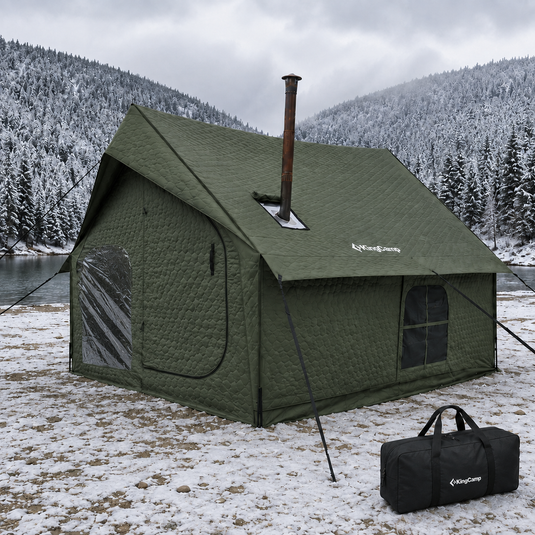 |
Blocks wind and precipitation while creating an organized cold-weather base camp. | Capacity, insulation, ventilation, anchoring and stove-jack compatibility | Families, groups and vehicle-supported winter base camps | KingCamp SnowHouse 5 |
| Sleeping Pad | 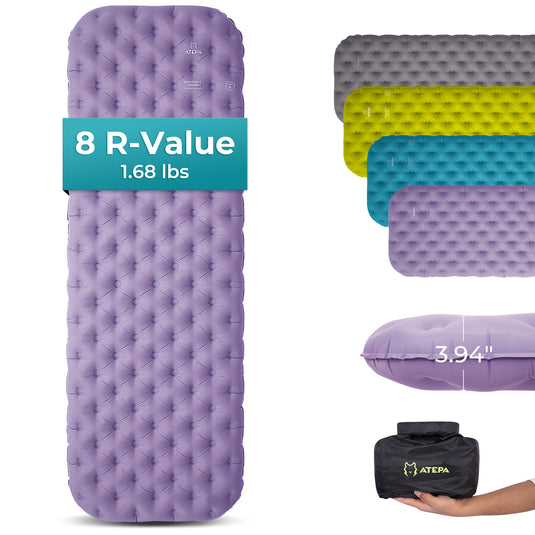 |
Reduces heat loss to cold or frozen ground. | R-value, thickness, dimensions, weight and packed size | Winter campers wanting high insulation with backpack-friendly weight | ATEPA GridX 8 |
| Sleeping Bag | 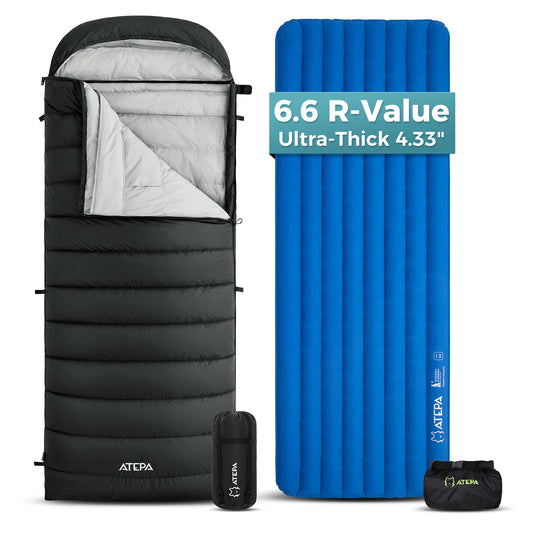 |
Retains body heat above and around the sleeper. | Comfort rating, insulation, shape, fit and packed volume | Campers who want a coordinated bag-and-pad winter setup | ATEPA 4-Season Sleep System |
| Camping Chair |  |
Keeps campers off wet or frozen ground during low-activity periods. | Seat size, padding, capacity, packed size and heating requirements | Couples and vehicle-supported camps | KingCamp CANNA C20 PLUS |
| Heated Blanket | 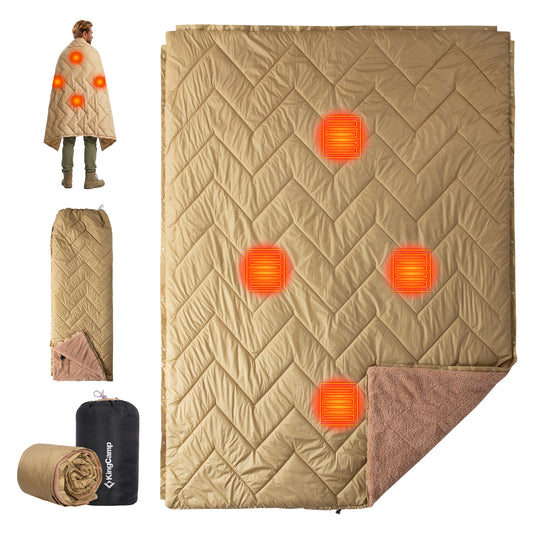 |
Adds supplemental warmth around camp or inside a compatible sleep setup. | Heating zones, power input, size, materials and expected runtime | Cold evenings, car camping and supplemental warmth | KingCamp HEATED NIMBUS Blanket |
Important: Heated accessories provide supplemental comfort. Your shelter, sleeping pad, sleeping bag and clothing should remain suitable for the forecast without powered heat.
Recommended BRoadout Winter Camping Gear
These examples cover different winter camping priorities. Always match each product to your forecast, group size, transportation and experience level, and confirm current availability before ordering.
Quick BRoadout Winter Gear Comparison
Use this matrix to compare the main use case and verified published specifications before reading the detailed recommendations below.
| Recommended Product | Category | Best For | Verified Key Specs | Why Choose It | Product Link |
|---|---|---|---|---|---|
| KingCamp SnowHouse 5 | Insulated hot tent | Family and group base camps | 5–6 person; 11'2" × 7'9" × 6'9"; three-layer insulated shell | Creates a spacious, organized winter shelter with a stove-compatible port. | View SnowHouse 5 |
| ATEPA GridX 8 | Insulated sleeping pad | Winter backpacking and cold sleepers | R-value 8; 3.9" thick; 76.4" × 24.4"; 1.68 lb with stuff sack | Provides substantial ground insulation without the weight of a large car-camping mattress. | View GridX 8 |
| ATEPA 4-Season Sleep System | Sleeping bag and pad bundle | Campers wanting a coordinated sleep system | ELEMENTS 600 wearable down bag plus R-value 6.6, 3.94" insulated pad | Combines above-body insulation and ground insulation in one matched package. | View Sleep System |
| KingCamp SUREFIRE L2 | Hot tent wood stove | Larger compatible hot tents | 1.0 mm 201 stainless steel; six chimney pipes; 31.5" × 49.2" fire mat | Includes core chimney and ground-protection components for a compatible setup. | View SUREFIRE L2 |
| KingCamp CANNA C20 PLUS | Heated loveseat | Couples and shared car-camping comfort | Two-person padded seat; four heating zones; three heat settings | Adds shared seating and powered warmth for low-activity evenings. | View CANNA C20 PLUS |
| KingCamp HEATED NIMBUS Blanket | Heated outdoor blanket | Supplemental warmth around camp | 78.7" × 57.1"; four heating zones; Sherpa-fleece side | Provides flexible powered warmth for seating, relaxing or layering. | View HEATED NIMBUS |
Best High-Insulation Backpacking Pad: ATEPA GridX 8
The ATEPA GridX 8 Ultralight Insulated Sleeping Pad combines an R-value of 8 with a published weight of 1.68 pounds including the stuff sack. Its listed dimensions are 76.4 × 24.4 inches with approximately 3.9 inches of thickness. It is a strong option for campers who want substantial ground insulation without moving to a heavy car-camping mattress.
Best Ready-Matched Sleep System: ATEPA 4-Season Sleeping System Bundle
The ATEPA 4-Season Sleeping System Bundle pairs an ELEMENTS 600 wearable down sleeping bag with an R-value 6.6 insulated pad. It is designed for shoppers who want a coordinated above-and-below insulation system instead of selecting the two components separately. Confirm that the bag rating and dimensions fit your expected conditions and body size.
Best Family Winter Base Camp: KingCamp SnowHouse 5
The KingCamp SnowHouse 5 Insulated Hot Tent is a vehicle-supported option for families and groups. Its published expanded size is 11 feet 2 inches by 7 feet 9 inches with a 6-foot-9-inch peak height. The three-layer shell, stove-compatible port, removable floor, divider and winter anchoring components support an organized multi-person base camp.
Best Large Hot Tent Stove: KingCamp SUREFIRE L2
The KingCamp SUREFIRE L2 Hot Tent Stove uses a 1.0 mm 201 stainless-steel body and includes six chimney sections, grill grates and a silicone-coated fiberglass fire mat. It is intended for larger compatible hot tents. Carefully verify chimney fit, clearances, ventilation and all operating instructions before building the system.
Best Heated Chair for One: KingCamp CANNA C10 PLUS
The KingCamp CANNA C10 PLUS Heated Camping Chair is an oversized single-seat option with three heat settings. It is best treated as an evening comfort upgrade for car camping, sports events and base camps rather than a required survival item.
Best Heated Seat for Couples: KingCamp CANNA C20 PLUS
The KingCamp CANNA C20 PLUS Heated Loveseat gives two campers a shared padded seat with four heating zones and three heat settings. It suits couples and vehicle-supported camps where packed size and battery management are less restrictive.
Best Flexible Warmth Upgrade: KingCamp HEATED NIMBUS Blanket
The KingCamp HEATED NIMBUS Blanket measures 78.7 × 57.1 inches and combines four-zone powered heating with a Sherpa-fleece side. Use it around camp or as a supplemental layer, while keeping an unpowered insulation backup ready.
What Winter Camping Gear Should You Buy First?
If you are building a setup gradually, use this purchase order:
- Sleeping pad: Ground insulation is easy to underestimate and difficult to replace with extra clothing.
- Sleeping bag: Choose the comfort rating and fit for your coldest planned trip.
- Shelter: Match wind, snow, precipitation and group size.
- Clothing and emergency equipment: Build redundancy for moisture, navigation, lighting and delays.
- Cooking and water system: Confirm cold-weather function and carry backup ignition.
- Hot tent or furniture upgrades: Add these once the essential sleep and safety systems are complete.
A bundle can be a good value when every included component matches your needs. Buying separately is usually better when you already own part of the system, require a specific size or need very different performance from the standard pairing.
Winter Camping Gear FAQ
What gear is absolutely essential for winter camping?
The essentials are a weather-appropriate shelter, insulated sleeping pad, properly rated sleeping bag, layered clothing, food and water, lighting, navigation, first aid, communication and an emergency plan. A hot tent, cot and heated accessories are optional comfort upgrades.
What R-value is best for winter camping?
An R-value around 5.5 or higher is a useful starting point for many winter trips. For snow, colder temperatures or cold sleepers, consider approximately R-7 or higher. Match the pad to the forecast and your full sleeping system rather than relying on one threshold.
What sleeping bag temperature rating should I choose?
Use the comfort rating when available and choose a bag rated below the expected overnight low. A buffer of roughly 10–15°F is a common planning approach, with more margin for cold sleepers, beginners and remote trips.
Do I still need a sleeping pad if I use a cot?
Yes. A cot provides support and elevation but usually little insulation. Use an insulated sleeping pad on the cot to reduce heat loss to the cold air below.
Is a hot tent necessary for winter camping?
No. Many campers use a suitable four-season shelter and an adequate sleep system without a stove. Hot tents are especially useful for comfortable vehicle-supported base camps, drying gear and spending longer periods at camp.
Can I use a regular camping stove inside a tent?
No. Generic camp stoves, grills and portable heaters can create carbon monoxide and fire hazards in enclosed spaces. Hot-tent equipment must be specifically designed and documented for that use, with correct venting and strict adherence to manufacturer instructions.
Are heated camping products worth buying?
They can be worthwhile for car camping, couples, families and low-activity evenings. Before buying, check power requirements, runtime, battery cold-weather performance and cleaning instructions. Keep non-powered warmth available in case the battery fails.
Should beginners go winter camping alone?
Beginners should start with experienced partners, a familiar location, a conservative forecast and an easy exit. Test the entire setup close to home before committing to a remote winter trip.
Build Your Winter Camping System
Start with the conditions you expect, then build from the ground up: insulated pad, properly rated sleeping bag, dependable shelter, dry layers and emergency backups. Once those essentials are covered, add the hot-tent, heating and furniture upgrades that make winter camp feel like a true base camp.
